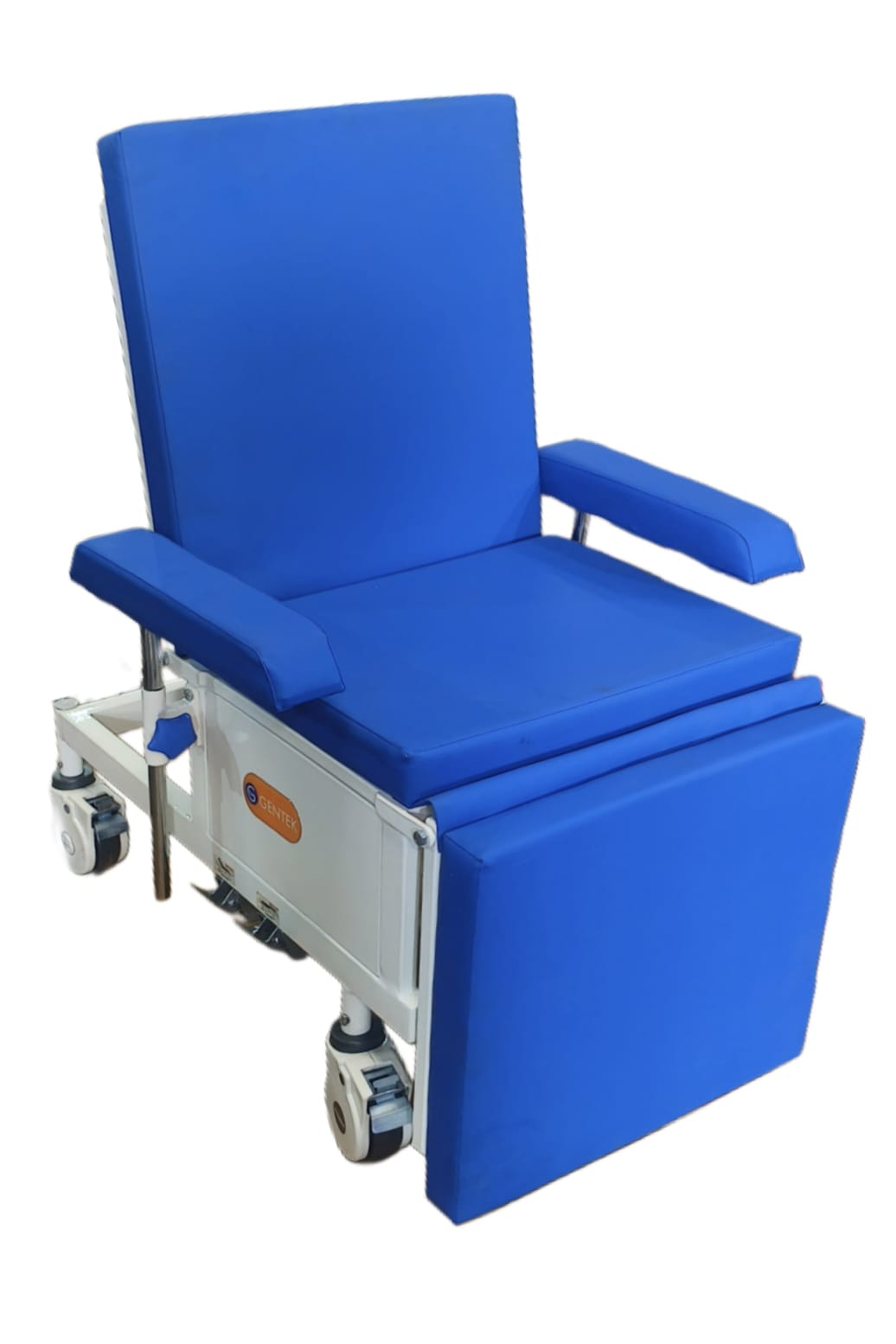
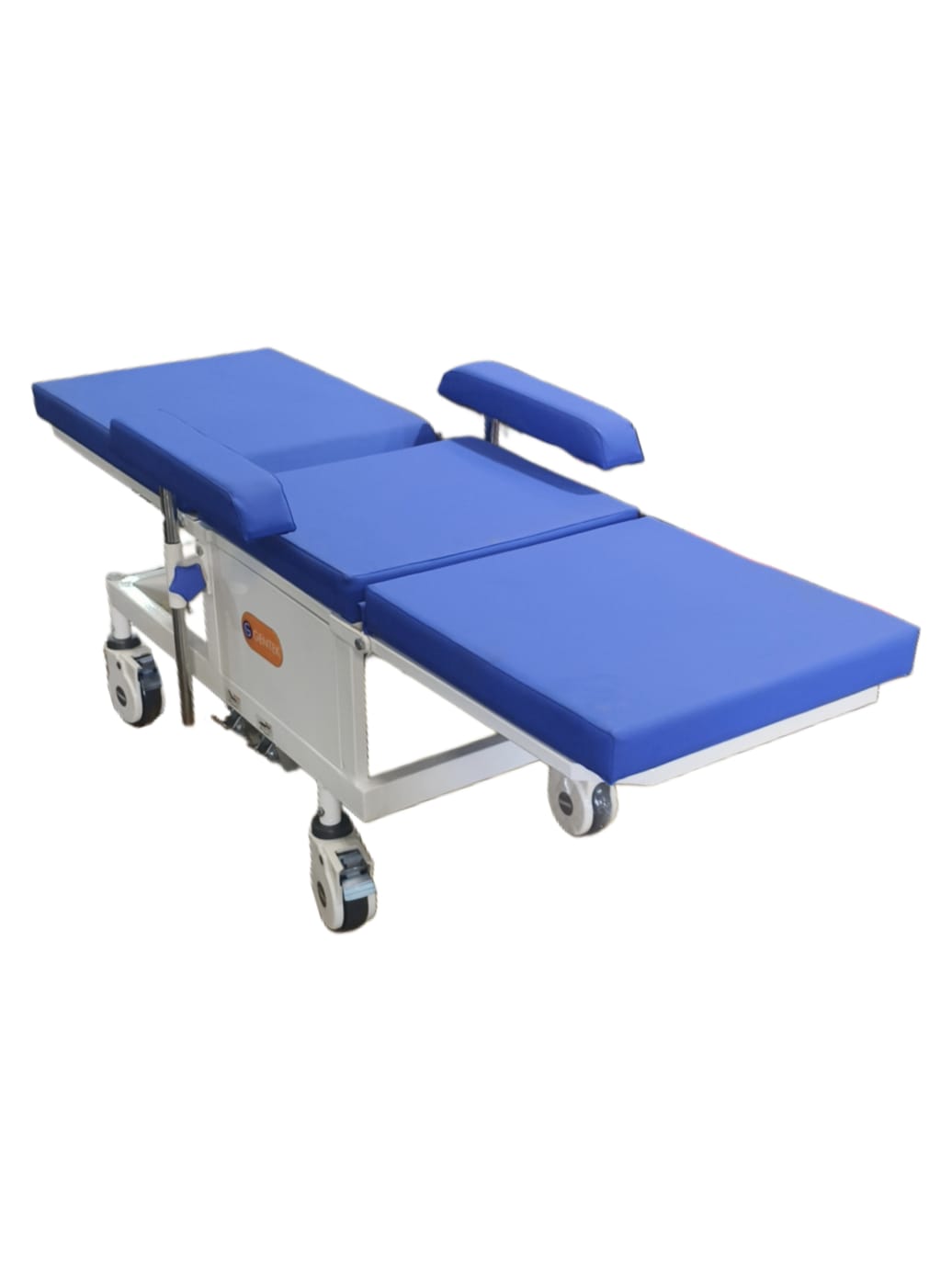
Gentek Blood Donor Chair (M.S. Manual) is a specially designed seating solution used in blood banks, hospitals, clinics, and mobile donation camps to provide comfort and safety for donors during the blood collection process. Constructed primarily from mild steel (M.S.), these manual chairs are robust, durable, and engineered to support donors throughout the donation procedure, ensuring a stable and relaxed experience.
Design & Structure
Gentek High-quality mild steel tubing as the main structural material, ensuring resistance to wear and tear.
Ergonomic seating and backrest, often padded with high-density foam and covered in easy-to-clean medical-grade vinyl or leatherette.
Manual reclining function, allowing healthcare staff to adjust the backrest angle using a simple lever or manual mechanism. This lets the donor be positioned comfortably—from upright for initial seating to a slight recline during blood collection.
Armrests with adjustable height and angle, providing secure support for the donor’s arms and facilitating easy access for phlebotomy. Some designs include padded armrests to reduce discomfort during longer donation sessions.
Footrests or leg support, which enhance donor comfort, particularly for longer blood collection procedures or for donors with circulatory issues.
Unlike electric or hydraulic chairs, a manual M.S. donor chair relies on mechanical adjustments, making it simpler to maintain and ideal for settings where electrical infrastructure may not be reliable—such as in rural camps or mobile blood drives. Its design is practical, low-maintenance, and cost-effective, without compromising essential comfort and safety features.
The chair’s non-electric reclining mechanism allows nurses to position donors at the proper inclination for optimal venous access, helping reduce the risk of fainting or discomfort. Additionally, the chair’s robust build supports donors of various body types, ensuring a safe and secure seating experience.
Manual blood donor chairs help maintain donor comfort and confidence throughout the process. The ergonomic design minimizes muscle strain and displays thoughtful integration of horizontal and incline seating positions that support smooth blood flow and improve donor relaxation. Comfortable armrest positioning also aids phlebotomists in performing efficient and safe blood draws.
Mild steel construction ensures the chair withstands frequent use and sanitation protocols common in clinical settings. The chair’s simple mechanical parts are easy to inspect, clean, and repair, making it a practical choice for blood donation facilities operating on tight budgets.
Overall, an M.S. manual blood donor chair is a reliable, comfortable, and cost-effective solution for blood collection settings, supporting both donor welfare and clinical efficiency.