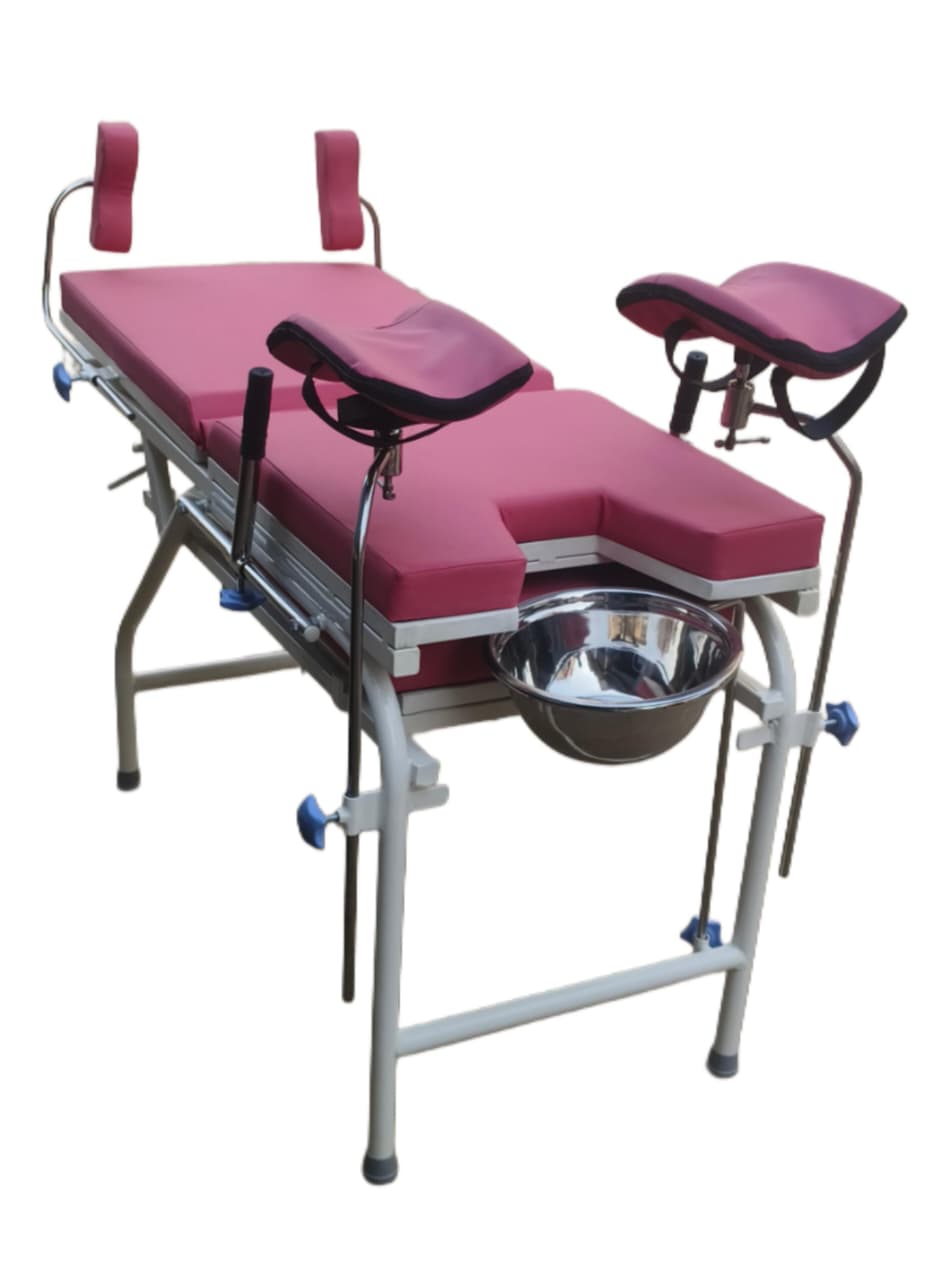
GM 8002 Gentek delivery table (mechanical type) is a critical piece of equipment used in hospitals and maternity centers to support women during childbirth and minor gynecological procedures. It is specifically designed to provide comfort to the patient while allowing medical professionals optimal access and positioning during delivery.
Gentek mechanical delivery table operates through manual adjustment mechanisms such as cranks, levers, or hydraulic foot pedals. Unlike fully electric models, it does not rely on electrical power, making it highly reliable in areas with limited or unstable electricity supply. The table is typically constructed from strong materials like stainless steel to ensure durability, hygiene, and resistance to corrosion.
The structure of a mechanical delivery table usually consists of several key components. The main table frame provides stability and support. The tabletop is divided into sections such as the backrest, seat section, and leg section. The backrest can be adjusted manually to allow the patient to sit upright or recline, depending on the stage of labor. The leg holders or lithotomy supports are adjustable to position the patient’s legs comfortably and securely.
Many mechanical delivery tables also include removable accessories such as a stainless-steel bowl for collecting fluids, padded cushions for patient comfort, and side rails for safety. Some models are equipped with castor wheels with locking mechanisms, allowing the table to be moved easily within the delivery room and secured firmly in place during procedures.
One of the main advantages of a mechanical delivery table is its cost-effectiveness compared to electric models. It requires minimal maintenance, and its simple mechanical system reduces the risk of technical failure. Additionally, because it does not depend on electricity, it can be used effectively in rural clinics and emergency settings.
Proper cleaning and sterilization are essential to maintain hygiene standards. The surfaces are designed to be smooth and easy to disinfect after each use. Regular inspection of moving parts ensures smooth operation and long service life.